
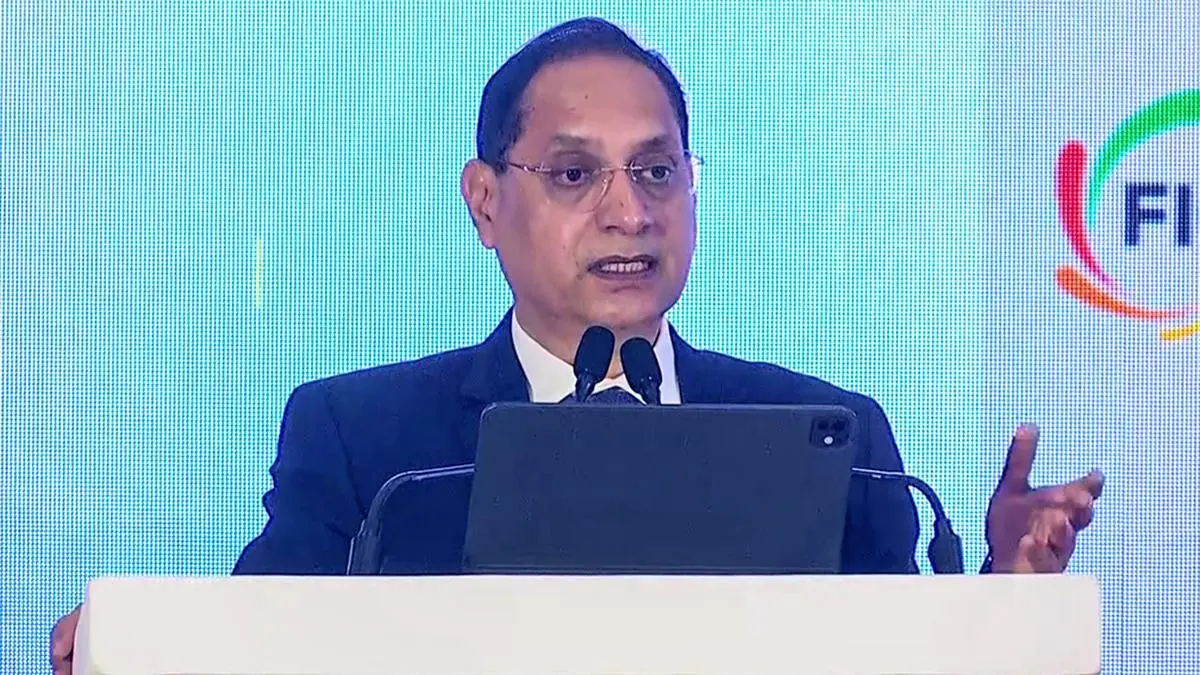
SEBI Chairman Tuhin Kanta Pandey at the 22nd Annual Capital Markets Conference, organised by FICCI, in Mumbai on Thursday
| Photo Credit:
ANI
The Securities and Exchange Board of India (SEBI) is exploring measures such as extending the tenure and maturity profile of equity derivatives contracts in a “calibrated” manner to check excessive speculation, reduce retail losses and volatility, Chairman Tuhin Kanta Pandey said on Thursday.
Speaking at the FICCI Capital Market Conference 2025, Pandey said, “We will consult with stakeholders on ways to improve in a calibrated manner the maturity of derivative products so that they better serve hedging and long-term investing,” he said.
However, the plan is still at a conceptual stage, Pandey said on the sidelines of the event. Shares of BSE and Angel One fell 5 per cent each on Thursday amid concerns that removal of weekly derivatives contracts could dent their revenues.
SEBI whole-time member Ananth Narayan said the industry would be given adequate time to adjust. “We are considering ways to improve the tenor and maturity profile of derivative products so that they better support sustained capital formation and foster all-around trust in the ecosystem,” he said.

SEBI Chairman Tuhin Kanta Pandey
| Photo Credit: SHASHANK PARADE
The regulator’s focus is also on deepening the cash equity market through possible incentives or margin relaxations. Average daily traded volumes in the cash segment have grown over 25 per cent annually in the past five years to more than ₹1 trillion, but short-term derivative volumes have risen even faster.
Framework on cards
SEBI is also examining a product suitability framework for the equity derivatives segment to ensure participation is informed, suitable, and appropriate for investors. “Here again, stakeholder engagement will be key–we are open to all constructive ideas,” Narayan said.
The regulator has also formed a special team inside the surveillance department, along with NSE, to study its surveillance following alleged derivatives manipulation by US-based firm Jane Street, said WTM Kamlesh Varshney.
Retail participation in derivatives has surged sharply in recent years, prompting SEBI to limit the number of weekly expiries, raise lot sizes, and introduce a slew of other curbs. A recent SEBI study showed that retail investors’ losses widened by 41 per cent to ₹1.06 lakh crore in FY25 in equity derivatives, with 91 per cent of individual traders continuing to incur losses.
Published on August 21, 2025