
Benefits of Rigid Flex Printed Circuit Boards
The combination of rigid and flexible substrates in rigid flex PCBs provides significant environmental benefits for electronics. These include enhanced reliability and durability, reduced assembly costs, and more. Rigid flex PCBs have fewer connections and solder joints compared to traditional rigid PCBs, which reduces the potential for loose or broken connections that can cause failure. The absence of interconnecting wires and cables also decreases the likelihood that connections will become damaged by vibration, shock, or bending.
Additionally, rigid flex PCBs have mounting components built into the flexible sections of the circuit board. This reduces the number of external connectors and other components that must be incorporated into the final product, which simplifies assembly. With a lower component count, less time is spent on labor, which further cuts the total cost of manufacturing. Lastly, the inclusion of plated through holes (PTH) and integrated ZIF contacts enable rigid-flex boards to undergo rigorous testing and validation before shipment and installation.
The environmental benefits of rigid flex PCBs are further amplified by their ability to resist harsh operating environments. rigid-flex printed circuit board are highly resilient and are capable of withstanding temperature fluctuations, humidity, radiation, and vibration. This combination of resilience and a compact form factor makes them ideal for automotive, medical, and aerospace applications, where reliability and longevity are of the utmost importance.
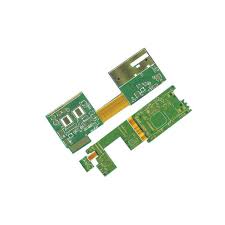
The Environmental Benefits of Rigid Flex Printed Circuit Boards
Another major benefit of rigid flex PCBs is their ability to maintain signal integrity. The elimination of connectors and shorter signal paths reduces impedance discontinuities, improving signal transmission quality. This is especially important for high-speed applications, like those found in communication and data transfer systems.
In addition, rigid flex PCBs can help to minimize environmental hazards in critical applications by providing points of attachment for moving parts. This can prevent malfunctions and injuries from unintended movement, which could otherwise be caused by faulty connectors or other external wiring.
Although rigid-flex PCBs often involve a higher upfront cost than traditional rigid-circuit boards, they offer the potential for substantial long-term savings. In the end, the benefits of improved functionality and reliability will likely outweigh the initial investment.
Rigid flex PCBs can also be used to eliminate expensive external connectors and wiring. This will save space, simplify assembly, and reduce the risk of errors and connections that can cause system failures and damage. This translates into significant savings in the long run in the form of reduced maintenance, repair, and replacement costs.
Choosing the right rigid-flex PCB is crucial to the success of your design. It is important to consider your application requirements, design constraints, and manufacturing processes. Rigid flex PCBs can help to improve functionality and efficiency in your final product, but they must be designed with care and precision. Low-quality rigid flex PCBs can introduce safety hazards and other problems that can affect the performance of your design. These issues may lead to costly unplanned downtime, repair, and replacement costs. The best way to ensure that your rigid flex PCB is high-quality is to work with an experienced manufacturer that offers a range of services, including rigid-flex.